
AI in Healthcare 2026:
From Diagnosis to Drug Discovery
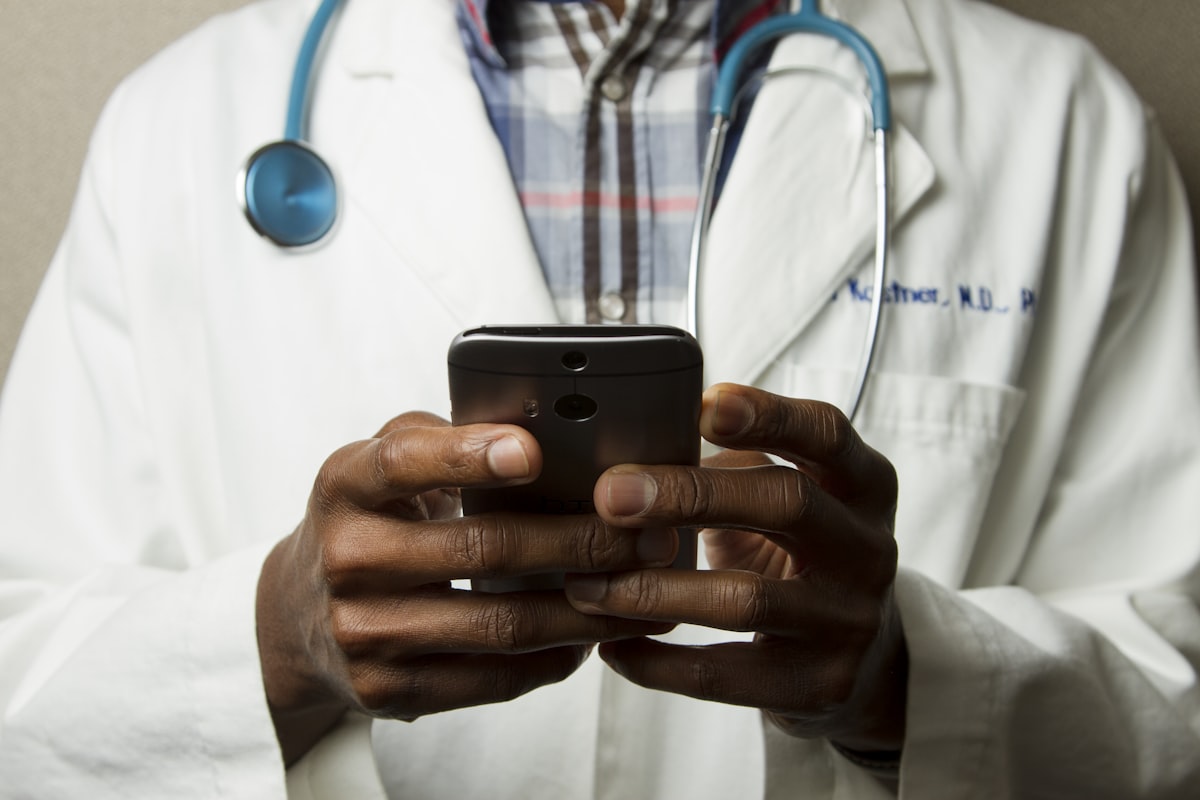
Healthcare may be where AI has its most consequential impact in 2026. Not because the technology is newest here — but because the stakes are highest. AI systems are now detecting cancers earlier than clinicians in controlled studies, AI-designed drugs are entering mid-stage clinical trials, and a majority of patients in some countries are already using AI for symptom checking.
AI Diagnostics: Seeing What Humans Miss
Medical imaging has been the early proving ground for AI in healthcare. Machine learning models trained on millions of scans can now detect subtle early-stage cancers, retinal diseases, and cardiac anomalies with accuracy that matches or exceeds specialist clinicians — particularly in under-resourced settings where specialist access is limited.
Google DeepMind's radiology AI can flag potential findings across multiple organ systems from a single CT scan. Startup Rad AI integrates into existing hospital RIS/PACS systems, automatically drafting radiology reports and highlighting urgent findings for human review. The net effect: faster diagnoses, fewer missed early-stage cancers, and radiologists freed up for complex cases.
Drug Discovery: AI Enters Clinical Trials
The biotech sector is calling 2026 a landmark year. Several drug candidates that were identified and optimized entirely by AI systems are now in mid-to-late-stage clinical trials. This marks the transition from AI as a computational tool to AI as a genuine discovery engine.
Key Players
Isomorphic Labs (Google DeepMind spinout) is applying AlphaFold 3 protein structure predictions to design novel drug candidates for oncology and rare diseases. Recursion Pharmaceuticals uses AI to run millions of virtual cellular experiments, dramatically compressing the pre-clinical timeline. Insilico Medicine became one of the first companies to move an entirely AI-designed drug into Phase II trials.
AI-Powered Patient Support
Symptom Checking & Triage
Apps like Ada Health and Symptomate use AI to guide patients through symptom assessment, suggest possible conditions, and recommend appropriate care pathways. A 2026 UK study found that 59% of patients now use AI for self-diagnosis — driven largely by long wait times for GP appointments. When used as a triage layer, these tools reduce unnecessary emergency visits and help people recognize serious symptoms earlier.
Chronic Disease Management
AI virtual assistants are monitoring patients with chronic conditions in between clinical appointments — reminding about medications, tracking vitals via wearable integration, and flagging anomalies to care teams. Patients with diabetes and heart failure in particular are seeing improved adherence and early intervention rates.
| Application | Key Tools | Stage | Clinical Evidence |
|---|---|---|---|
| Cancer Detection | DeepMind, Rad AI | Deployed | Strong |
| Drug Discovery | Isomorphic, Recursion | Phase II trials | Emerging |
| Symptom Checking | Ada Health, Symptomate | Mainstream | Moderate |
| Chronic Care | Dario, Livongo AI | Deployed | Strong |
| Clinical Notes (LLM) | Nuance DAX, Ambience | Deployed | Strong |
The Challenges
Despite the promise, significant hurdles remain. Regulatory approval pathways for AI-based diagnostic tools are still evolving. Bias in training data can lead to worse performance in underrepresented patient populations. And patient trust — particularly for high-stakes diagnoses — still requires a human physician in the loop.
There's also the question of liability: when an AI system contributes to a misdiagnosis, who bears responsibility? These legal and ethical frameworks are still being written, and their resolution will shape how broadly AI can be deployed in clinical settings.